
TRP Document Checklist: What You Need for a Canadian Temporary Resident Permit Application

middle-aged-woman-handing-documents-to-man

A Temporary Resident Permit (TRP) application needs:


  1. The correct IRCC application form
  2. The IMM 5557 document checklist
  3. Passport copies
  4. Photos
  5. The government processing fee
  6. Supporting evidence of both your inadmissibility and your compelling reason for entering Canada


The exact form set and the exact evidence change depending on where you apply from, why you are inadmissible, and what you plan to do once you are here.


This guide walks through every document IRCC expects to see in a TRP application and how to put a file together that gives an officer a real reason to grant the permit. We cover the practical details that determine most outcomes, including the difference between IMM 5557 and the actual application forms, how evidence shifts across inadmissibility grounds, and what officers look for in the compelling-reasons submission.

If a removal order is already in play or your inadmissibility involves serious criminality, our Canada deportation lawyer at Kingwell Immigration Law can advise on the TRP route alongside any removal defence.

★★★★★

Immigration Guidance That Changes Lives

We solve immigration challenges with experience, care, and proven results

Book Personalized Legal Help
Table of Contents

How Kingwell Immigration Law assists with TRP applications

Our firm prepares Temporary Resident Permit applications for clients across every inadmissibility ground, including criminal, medical, misrepresentation, financial, security, and non-compliance matters.


Founded by Daniel Kingwell, who has over 20 years of immigration law experience and Federal Court litigation capability, the firm is positioned to handle straightforward TRPs and the complex matters that arise when an officer pushes back.


We help in three main ways:


  1. First, we identify exactly which forms, fees, and evidence your specific situation requires, so nothing is missing when the file reaches IRCC.
  2. Second, we draft the legal submission that explains, in the language officers respond to, why your reasons for entering Canada outweigh the risk your inadmissibility creates.
  3. Third, when an application is refused, returned, or stalled, we are equipped to challenge that decision, including at the Federal Court, where reconsideration orders against IRCC have been a regular outcome of our work.

TRP application forms by where you apply

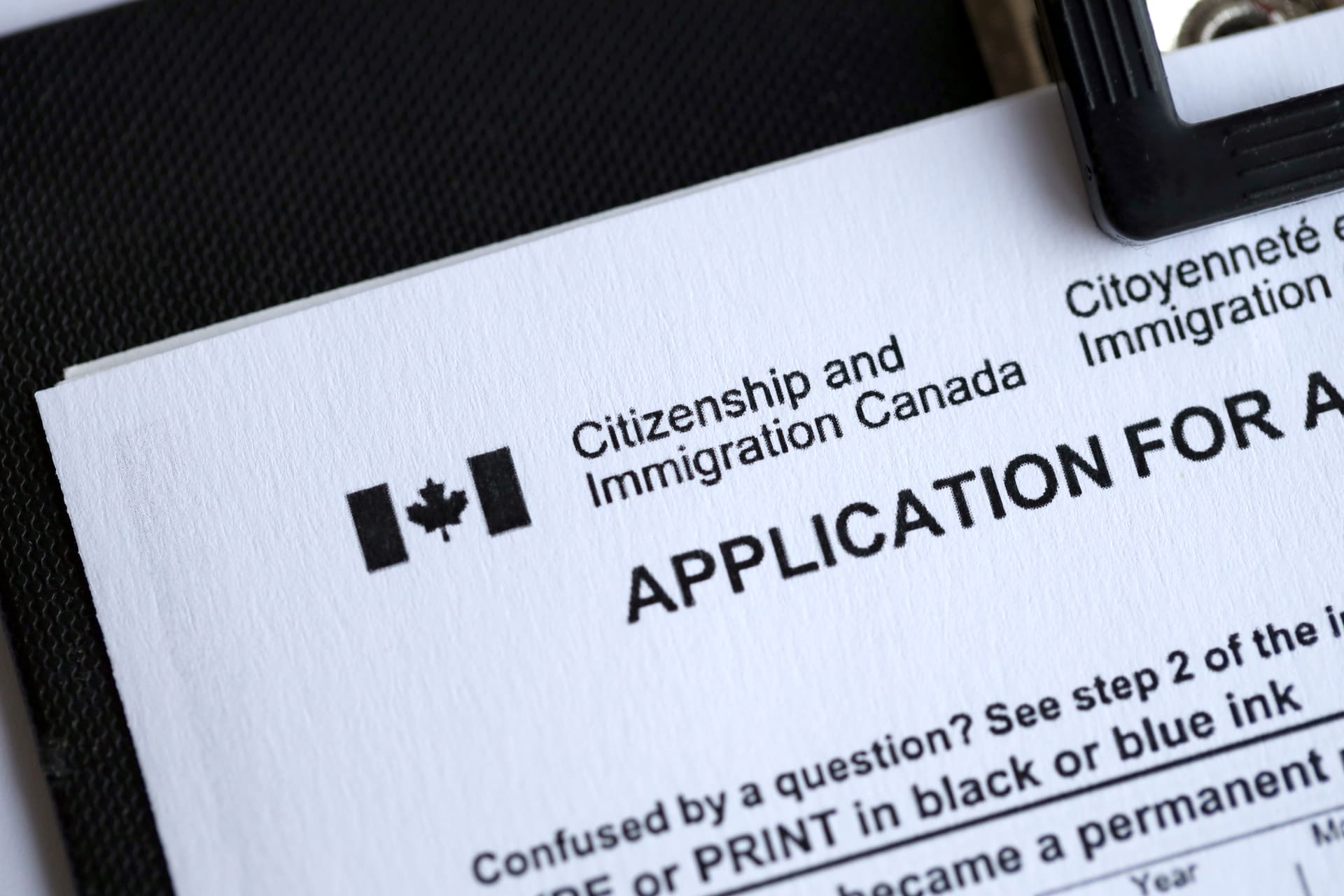
The form set depends on whether you are applying inside Canada, outside Canada, or at the port of entry. Many applicants confuse IMM 5557 (the document checklist) with the actual application form, which leads to incomplete submissions.


  1. Inside Canada (already in Canada on temporary status). The main application form is IMM 5708, Application to Change Conditions, Extend my Stay or Remain in Canada as a Visitor or Temporary Resident Permit Holder. IMM 5557 is the checklist that confirms you have included everything. If you want to study or work while holding the TRP, add IMM 5709 or IMM 5710 to the package.
  2. Outside Canada. You apply through the Canadian visa office responsible for your country of residence. The forms differ from the inland set, and submissions are usually made through the IRCC online portal.
  3. Port of entry (POE). Some applicants, most commonly U.S. citizens with criminal inadmissibility, can request a TRP directly from a CBSA officer at the border or airport. The officer assesses the application on the spot, and you must arrive with a complete documentary record because there is no opportunity to add to the file later.


Picking the wrong form set is one of the most common reasons a TRP application is returned before it is even assessed. Our team confirms the correct route for your situation and prepares the form package that matches it.


💡 Additional reading: What is a TRP in Canada

The IMM 5557 document checklist explained

IMM 5557 is the two-page form IRCC uses to confirm you have included every required enclosure with your inland TRP application. Submitting the checklist itself is mandatory, and if it is missing or unticked, IRCC may return the file without assessing it.


The checklist is divided into two sections:


  • Forms list. This covers the application forms that must be completed, signed, and dated. The IMM 5708 application is required for every inland TRP. IMM 5476 (Use of a Representative) is required if you are working with an authorized representative. IMM 5475 (Authority to Release Personal Information) is required if you want IRCC to share information about your file with another person. IMM 5409 (Statutory Declaration of Common-law Union), IMM 5709 (student), and IMM 5710 (worker) are added only where they apply.
  • Documents list. This covers proof of payment, passport photocopies, alternative identity documents if you did not enter on a passport, your current immigration document, two passport-size photos, marriage or common-law evidence where applicable, photocopies of any criminal conviction records, evidence of steps taken to resolve your inadmissibility, and proof of means of support.


When you instruct our firm, we work through every line of IMM 5557 against your circumstances, confirm which forms and documents apply, and arrange certified translations for any non-English or non-French records before the file is submitted.

Forms required for every TRP application

Every inland TRP application needs the same core set of completed and signed forms. The barcode page generated when you complete the form on a computer must be printed and placed on top of the application package.


  • IMM 5708, Application to Change Conditions, Extend my Stay or Remain in Canada as a Visitor or Temporary Resident Permit Holder. This is the primary application form. The barcode page (page 5) must sit at the front of the package.
  • IMM 5476, Use of a Representative. Required only when you are appointing or cancelling an authorized representative. If you instruct our firm, this form lets IRCC communicate with us directly about your file.
  • IMM 5475, Authority to Release Personal Information. Required only if you want IRCC and CBSA to share information from your file with someone other than yourself.
  • IMM 5409, Statutory Declaration of Common-law Union. Required only if your marital status involves a common-law partner.
  • IMM 5709 or IMM 5710. Required only if you are applying to study (IMM 5709) or work (IMM 5710) at the same time as your TRP. Each comes with its own fee.


Our team completes each form, validates the barcode pages, and assembles the package in the order IRCC expects, so the application moves into assessment without delay.
canadian-citizenship-and-immigration-application

Supporting documents for every TRP application

Beyond the forms, every TRP file needs a baseline set of personal documents that officers expect, regardless of the inadmissibility ground.

  • Proof of fee payment. A printed IRCC receipt confirming the $246.25 TRP processing fee. The fee is non-refundable and must be paid before IRCC begins assessment.
  • Passport photocopies. Clear photocopies of every relevant page, including biographical data, issue and expiry dates, the entry stamp from your most recent arrival in Canada, and any other pages with markings. If you did not enter on a passport, include copies of the travel or identity document you used (citizenship certificate, birth certificate, alien registration card, etc.).
  • Current immigration document. A photocopy of any visa, study permit, work permit, or prior TRP that is currently or recently in effect.
  • Two passport-size photographs. Stapled to the top of the front page of the application, not glued. Your name and date of birth must be printed on the back of each photo.
  • Marriage or common-law evidence (where applicable). A photocopy of your marriage licence or certificate, or supporting documents for a common-law relationship.
  • Proof of means of support. Bank statements, employment letters, or a sponsor’s financial declaration showing you can support yourself for the duration of the TRP.

The current TRP processing fee is confirmed on the IRCC fee list and applies per person, so family members each require their own fee. Our firm tracks these baseline documents against your circumstances and flags any gaps before the file is submitted.

Documents required by inadmissibility grounds

This is the section that separates a complete file from an incomplete one. The IMM 5557 checklist asks for “documents relating to criminal convictions” and “evidence of any action taken to resolve your inadmissibility,” but does not specify what that looks like for each ground.

1. Criminal inadmissibility

The most common reason TRPs are sought. The file should include court documents for every conviction (or charge, if applicable), evidence of rehabilitation, and proof that the conduct will not recur.

  • Certified court records, including the information or indictment, sentencing transcripts, certificates of conviction, and proof of completion of any sentence (custodial, probation, fines paid, community service hours).
  • Police certificates from every country where you have lived for six months or more since the age of 18.
  • The text of the foreign criminal statute you were convicted under, so IRCC can identify the Canadian equivalent offence.
  • Rehabilitation evidence, including completion certificates for counselling or treatment programs, employment records, reference letters from employers and community members, and any evidence of stability since the conviction.

DUI convictions have been classified as serious criminality in Canada since December 18, 2018, which raises the bar significantly.

A single DUI can render you inadmissible for life unless addressed through a TRP or criminal rehabilitation, and our firm prepares the evidentiary package that gives an officer a reasoned basis to grant entry.

2. Medical inadmissibility

A finding that you might cause excessive demand on health or social services, or pose a danger to public health or safety. Supporting documents should include:


  • The full medical report from your IRCC-approved panel physician.
  • Reports from your treating physicians explaining your diagnosis, prognosis, and treatment plan.
  • Cost estimates for any anticipated medical care in Canada and evidence that private insurance, family support, or other arrangements will cover those costs.
  • A mitigation plan setting out how you will manage the condition without relying on publicly funded services.

3. Misrepresentation

Applications based on prior misrepresentation findings require an honest account of what happened and a documented basis for why the TRP should still be granted.

  • A detailed sworn statement explaining the misrepresentation, the surrounding circumstances, and what has changed since.
  • Supporting affidavits from family members, immigration consultants, or others involved in the original application.
  • Documentary proof of the corrected facts, such as updated employment records, education certificates, or family relationship documents.
  • A clear statement of the compelling reason for the current application, given the heightened scrutiny misrepresentation files receive.

4. Financial inadmissibility

Findings under section 39 of the Immigration and Refugee Protection Act relate to being unable or unwilling to support yourself and your dependents. Evidence should include:
 

  • Recent bank statements covering at least the prior six months.
  • Employment letters and pay records, or evidence of stable income from another source.
  • A sponsor’s financial undertaking, if a Canadian relative or partner, will support you.
  • A budget showing how living costs in Canada will be covered for the proposed duration of the TRP.
canadian-citizenship-passport-and-national-flag

5. Security and organized criminality

The most serious grounds require substantial legal submissions alongside the document package. Files typically include:


  • Background information addressing the allegation directly, including affiliations, dates of involvement, and any documentation rebutting the security finding.
  • Country condition reports and academic or other authoritative evidence on the relevant organization or context.
  • Personal evidence of disengagement, including dates, witness statements, and any cooperation with authorities.

6. Non-compliance with the Immigration and Refugee Protection Act

Inadmissibility under section 41 covers failing to comply with the Act in some way, such as overstaying a previous visa or working without authorization. Documents should explain the non-compliance and demonstrate that it will not recur.

  • A written explanation of what happened, when, and why.
  • Evidence of your current status (whether you have departed Canada, restored status, or remained out of status).
  • Evidence of ties that establish why you should be allowed back, including family relationships and any economic links.

The compelling reasons submission

The most decisive document in any TRP file is the legal submission that explains why your reason for entering Canada outweighs the risk your inadmissibility represents. It is the centrepiece of the application, not a line item.

Officers assessing TRPs use a balancing test rooted in IRCC’s program delivery instructions on TRPs, weighing the seriousness of the inadmissibility against the strength of the reason for entry. A strong submission addresses:

  • The specific inadmissibility finding in legal terms, with the IRPA section identified.
  • The compelling reason for entry, such as work, study, family obligation, business necessity, or medical care, supported by documentary evidence, including employment offers, school acceptance letters, medical referrals, or family circumstances.
  • An assessment of risk to Canadian society, addressed directly rather than glossed over.
  • The length of stay requested and the specific activities planned during that stay.
  • Evidence of strong ties outside Canada, where applicable, to support the temporary nature of the visit.

The submission is where Daniel Kingwell’s Federal Court litigation background often shapes the outcome. Knowing how officers articulate refusals, and how those refusals fare on judicial review, informs how our team builds the original submission.

To discuss your compelling reasons submission with our team, book a consultation with Kingwell Immigration Law.

Establish Canadian Roots

Toronto Immigration Lawyer

  • 🇨🇦 Personalized Legal Support Across Canada
  • 📞 Urgent Assistance With Deportation & Applications
  • 🏛️ Trusted Immigration Representation
Book Now

Stream-specific TRPs with different requirements

Several TRP streams have their own document requirements, routing, and fee exemptions. These do not follow the standard IMM 5557 process.

  • TRP for Victims of Family Violence (TRP-FMV). A first TRP and first open work permit are free under this stream. The application is made by calling IRCC at 1-888-242-2100 and is processed through specialized officers. Supporting evidence includes a detailed personal statement, police reports, court records, letters from shelters or counsellors, medical assessments, and photographs of injuries.
  • TRP for Victims of Human Trafficking (TRP-VTIP). Also fee-exempt. Applications can be initiated by law enforcement referrals or directly through IRCC, and supporting evidence typically comes from victim services agencies, police, or NGOs working with trafficked persons.
  • TRP for foreign nationals who were in state care. Fee-exempt and available to people who came to Canada as minors under provincial or territorial child welfare systems and lost permanent or temporary resident status. Evidence focuses on care records and the original failure to secure status on the applicant’s behalf.

If your situation involves one of these streams, our firm can confirm the correct routing, prepare the application through the right office or hotline, and assemble the supporting evidence the stream calls for.

Submitting your TRP application

Inland TRP applications go to the New Waterford Digitization Centre in Sydney, Nova Scotia. This is a national federal processing centre, not a provincial office, and paper submission is the default route for most inland TRP files.


The current mailing address listed on IMM 5557 is: New Waterford Digitization Centre Temporary Resident Permits PO Box 8400 Sydney, NS B1P 0G6

Outside-Canada applicants apply through the visa office serving their country of residence, typically through the IRCC online portal. Port-of-entry applicants present their package directly to a CBSA officer on arrival.


Our firm organizes the file in the order of the IMM 5557 checklist, places the barcode page from IMM 5708 at the front, and dispatches the package to the right office for your application type so that the file moves into assessment promptly.


Additional reading: TRP document checklist

What happens when documents are weak or missing

If IRCC determines your application is incomplete, the file is returned without assessment. If the application is assessed but the supporting evidence is too thin, the TRP is refused.


Either outcome means lost time, lost money on the non-refundable fee, and the possibility that your existing status in Canada lapses while you regroup.


Common reasons applications are refused or returned include:


  • Missing forms, particularly the IMM 5557 checklist itself or the barcode page from IMM 5708.
  • Inadequate evidence of the compelling reason for entry. A single employment letter, for example, is unlikely to satisfy an officer who needs a documented business or family rationale.
  • Court documents that do not match the offences disclosed on the application.
  • A compelling reasons submission that does not address the inadmissibility directly.
  • Translations that are not certified or that do not match the original documents.


When an application is refused, the next step is often a reconsideration request supported by additional evidence, or judicial review at the Federal Court. Our firm has secured Federal Court reconsideration orders against IRCC where officers refused to consider important evidence or misapplied the legal test.


In Yasmin v Minister of Citizenship and Immigration (2018 FC 265), we successfully appealed the decision to the Federal Court on the basis that IRCC had not provided the applicant with evidence of a fingerprint match, in breach of procedural fairness.


In A.M. v Minister of Citizenship and Immigration (2019 FC 270), we appealed a Pre-Removal Risk Assessment refusal to the Federal Court, and the decision was overturned, with the Court agreeing that the officer had improperly rejected new evidence of ongoing danger.


In A.H. v Minister of Citizenship and Immigration (2020 FC 530), the judge overturned an IAD decision after agreeing the officer and IAD had improperly considered the applicant’s individual and relationship histories.


A file built to withstand judicial review is typically a file IRCC grants in the first place, and that is the standard our team brings to every TRP application we file.

Working with our firm on your TRP file

Most TRP refusals come down to one of two failures: missing documents or a submission that does not connect the documents to the legal test officers apply.


We work with clients across single DUI files, multi-conviction files, medical inadmissibility files involving children, and complex security and misrepresentation matters. Where the first application is refused, we are positioned to take the matter further through reconsideration, a fresh application, or judicial review.


To start work on your TRP application, get in touch with Kingwell Immigration Law via our booking page or call us at 416.988.8853.

⚖️

Your Path to Canada Starts Here

Trusted Advocates in Canadian Immigration Law

  • 20+ years of global immigration experience
  • Strategic help with complex or urgent cases
  • Personalized support for your immigration journey
Speak with an Immigration Lawyer

FAQs

How long does it take IRCC to process a TRP application?

Inland TRP applications through the Sydney centre typically take several months, outside-Canada applications through a visa office take three to six months, and port-of-entry applications are decided on the day of arrival by a CBSA officer. Kingwell Immigration Law monitors processing timelines and flags delays as they arise.

Yes, a single TRP application can address more than one ground of inadmissibility, such as a criminal conviction combined with a misrepresentation finding. Each ground needs its own evidence package and its own argument within the legal submission, which is the document Kingwell Immigration Law builds to tie multi-ground files.

A UCI is an eight or ten-digit number IRCC assigns to every person who interacts with Canadian immigration, and it appears on visas, study and work permits, refusal letters, and IRCC correspondence. Kingwell Immigration Law uses the UCI on every page of the TRP file to match your record.

Interviews are uncommon for TRP applications, and most files are decided on paper, but IRCC may call applicants in when the file involves serious inadmissibility, contested facts, or credibility questions about the compelling-reasons submission. Kingwell Immigration Law prepares clients for these interviews when they are scheduled.

A TRP grants temporary entry for a specific purpose despite inadmissibility and lasts only for the period the officer sets, while criminal rehabilitation is a permanent resolution that removes the inadmissibility entirely. Kingwell Immigration Law advises clients on whether a TRP, criminal rehabilitation, or both is the right route.